A Practical Model for Improving Any Relationship
Relationship habits are some of the hardest habits to change.
They’re tied to identity.
To safety.
To how we learned to survive connection.
We all want the same things:
- to feel connected
- to feel loved
- to feel worthy
But most of us have spent years learning how to protect ourselves instead.
How we relate to others is inseparable from how we see ourselves — and how safe the world feels to us. And if we didn’t grow up watching a loving, supportive relationship, we didn’t just miss those skills …
We learned different ones.
- Avoidance.
- Control.
- People-pleasing.
- Silence.
- Escalation.
And without meaning to, we pass those habits on — to our partners, and to our kids.
We’ve all experienced this moment:
- It’s late.
- The day has been heavy.
- We’re tired.
The other person says something simple — not even harsh — but our body hears it as a threat.
- Our chest tightens.
- Our mind speeds up.
- Our tone sharpens.
And within seconds, we’re no longer talking about the thing.
We’re in that familiar place:
- defending
- correcting
- explaining
- withdrawing
- trying to be right
Not because we want to hurt each other.
But because, in that moment, we stop feeling safe.
That’s the part most people miss.
Relationships don’t usually break because we don’t care.
They break because we lose safety, shift into protection, and don’t know how to come back.
This post is a practical model for coming back.
- Not perfect communication.
- Not “never fight.”
- Not therapy-speak.
Just a clear map of what’s happening — and a repair process that actually works.
What this is (and what it isn’t)
This is a relationship improvement model built around three truths:
- Every relationship sits somewhere on a spectrum
- Rupture is normal — repair is the skill
- You don’t get permission to encourage change until safety and dignity are restored
This isn’t about who’s right.
It’s not about diagnosing anyone.
It’s not even limited to romantic relationships.
It applies to:
- your relationship with yourself
- your relationship with your partner, kids, friends, co-workers
- your relationship with time, work, your body, uncertainty
Because the core issue is always the same:
We don’t experience relationships directly.
We experience our internal representation of them.
Your nervous system is constantly asking:
- Am I safe here?
- Do I need to protect myself?
- Can I relax?
- Can I be real?
The answers create the relationship you live inside.
Part 1 — The Map: Universal Relationship Levels
Every relationship lives somewhere on this spectrum.
These are not labels for people. They are modes of relationship — what it feels like from the inside.
You can move up and down in the same relationship depending on stress, context, capacity, and attention.
Level 1 — Threat / Survival
“This is dangerous. I must protect myself.”
What it feels like:
- walking on eggshells
- bracing for reaction
- panic urgency or emotional shutdown
- a need to escape, fight, freeze, or disappear
What people do here:
- lash out
- shut down
- numb
- avoid
- go silent and cold
At this level, the goal is not growth.
The goal is survival and stabilization.
What’s possible here:
Safety. Grounding. Nothing else yet.
Level 2 — Control / Management
“If I manage this well, I’ll be okay.”
The threat softens, but safety still feels fragile — so the relationship becomes something to handle.
What it feels like:
- monitoring tone, timing, mood
- rehearsing conversations in your head
- trying to prevent conflict
- self-editing constantly
- pressure to get it “right”
What people do here:
- people-please
- overthink
- micromanage
- push through limits
- “help” in ways that feel like pressure
This can look functional from the outside. Inside, it’s exhausting.
What’s possible here:
Stability — but not ease. Control — but not trust.
Level 3 — Transaction
“I’ll give if I get.”
Here, connection becomes conditional.
What it feels like:
- scorekeeping
- unspoken contracts
- resentment that builds quietly
- giving with strings attached
- holding back truth to avoid cost
What people do here:
- negotiate instead of relate
- withhold affection or vulnerability
- trade effort for approval
- make everything “fair” but nothing warm
Many long-term relationships get stuck here.
They function.
They coordinate.
They just don’t feel nourishing.
What’s possible here:
Cooperation. Reliability. Limited closeness.
Level 4 — Stability / Function
“This works. I can manage myself here.”
This is solid ground.
What it feels like:
- predictability
- mutual respect
- low drama
- clear roles
- emotional steadiness
This isn’t deep intimacy yet — but it’s no longer chaos.
What’s possible here:
Consistency. Competence. Foundation.
Level 5 — Partnership
“We’re on the same side.”
Something shifts here. The relationship feels shared, not negotiated.
What it feels like:
- warmth
- mutual support
- honest conversations
- willingness to repair after conflict
- relief: “I don’t have to manage this alone”
What people do here:
- assume good intent
- communicate directly
- set boundaries without punishment
- show up with care instead of control
What’s possible here:
Trust. Real teamwork. Emotional availability.
Level 6 — Secure Connection
“I can be fully myself here.”
Safety is felt — not calculated.
What it feels like:
- ease
- playfulness
- vulnerability without fear
- fast repair after rupture
- freedom to be imperfect
What’s possible here:
Deep intimacy. Authenticity. Rest.
Level 7 — Generative Bond
“This relationship makes us more alive.”
At this level, the relationship becomes expansive.
What it feels like:
- shared meaning
- mutual growth
- encouragement without agenda
- steady trust across seasons of life
What’s possible here:
Contribution. Stewardship. Enduring connection.
A truth that makes this map usable
No relationship stays at one level.
Stress pulls relationships down the path.
Attention and repair move them up.
Knowing where you are on the path explains why things feel the way they do.
Repair explains how you move.
Which brings us to the second half of the model:
Rupture + Repair.
Part 2 — The Process: Rupture + Repair
Rupture is inevitable.
Repair is optional.
Trust depends on choosing it.
Let’s walk through the six steps of the rupture + repair cycle.
Step 1 — Rupture
Trigger / disconnection
Rupture can be obvious:
- yelling
- criticism
- sarcasm
- slammed doors
Or subtle:
- a tone
- a look
- silence that feels loaded
- a comment that lands wrong
In rupture, two things happen:
- nervous systems activate
- each person becomes convinced their view is “the truth”
That’s normal. It’s protective.
But repair can’t begin until the body settles.
Step 2 — Regulation
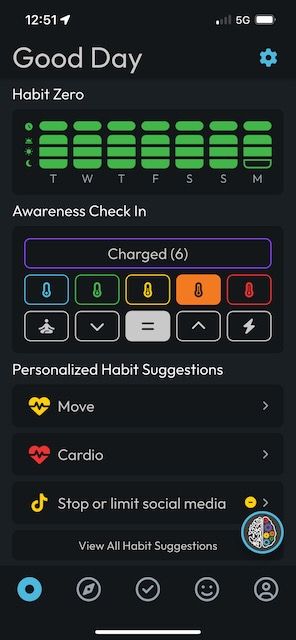
Getting to Zero (self-focused)
Before you can repair anything, you have to come back to centre.
Getting to Zero means stepping out of four distortions:
- seeing yourself as better than (up)
- seeing yourself as inferior to (down)
- resisting, avoiding, shutting down (left)
- grasping, fixing, controlling (right)
Zero is not weakness.
Zero is not agreement.
Zero is presence without agenda.
Until you’re closer to Zero, your words will carry:
- threat
- pressure
- defense
- manipulation (even if unintentional)
So the first question is always:
“Can I settle myself before I speak?”
Step 3 — Attunement
SHAPE (focused on S + H + A)
Once you’re closer to Zero, you shift outward.
Attunement is how you restore felt safety and dignity for the other person.
This is SHAPE — starting with S H A.
S — Safe
How can I help the other person feel safe?
- soften your tone
- slow down
- stay present
- remove threats (no bailing, no withdrawal, no punishment)
H — Heard
Am I actually listening?
- don’t interrupt
- don’t steer
- don’t “fix” their meaning
- reflect what you heard before responding
A — Accepted
Can I let them be where they are without ranking them?
- no “you’re too sensitive”
- no “you’re overreacting”
- no superiority, no pity
- just: “I get why that felt that way.”
Important:
Attunement doesn’t mean agreement.
It means the other person feels received.
And until a person feels received, they protect.
Step 4 — Responsibility
Joint ownership (focused on P — Presumed Capable)
This is the hardest step, because the mind says:
“But I’m right.”
So here’s the clarification:
Responsibility is not:
- admitting you’re wrong
- surrendering your perspective
- taking all the blame
Responsibility is:
- owning your impact
- owning your strategy
- owning your part of the rupture
- without forcing the other person to agree
This is where P comes in.
P — Presumed Capable
This is the moment you release control disguised as care.
Presumed Capable means:
- I don’t need to fix you
- I don’t need you to change right now
- I can separate what’s mine from what’s yours
- I can let go of my personal agenda
- I can trust your capacity to find your own way
This is not indifference.
It’s respect.
And it’s the only place joint ownership becomes possible.
Because the moment I need you to change, I’m not repairing — I’m controlling.
Step 5 — Reorientation
Learning + new agreements (E — Encourage)
Encouragement comes last.
Not because it’s unimportant — but because it’s powerful enough to harm trust if done too early.
Encouragement is an invitation, not a push.
It becomes appropriate only when:
- the other person feels safe (S)
- they feel heard (H)
- their dignity is intact (A)
- you are no longer trying to fix them (P)
From that place, encouragement sounds like:
- “What would help next time?”
- “What do you want to try?”
- “Here’s what I’m going to work on.”
- “Would it be okay if I shared an idea?”
If your suggestion needs compliance to feel safe, it’s not encouragement.
If you don’t have SHAP, you don’t have permission to encourage.
And even when you do:
- encouragement must preserve agency
- advice must remain optional
- change must belong to the person, not the relationship
Encouragement without SHAP feels like pressure.
Encouragement with SHAP feels like leadership.
Step 6 — Reconnection
Happens naturally
When:
- bodies are calm (Zero)
- safety is restored (S)
- a person feels heard (H)
- dignity is protected (A)
- control is released (P)
- and learning is invited (E)
…reconnection happens on its own.
Not forced.
Not negotiated.
Felt.
That’s what trust is.
The real result of this model
The goal isn’t “never rupture.”
The goal is:
- fewer spirals
- faster repair
- less damage
- more honesty
- more safety
Over time, a relationship climbs the path not by intensity …
… but by repair skill.
Part 3 — The Practice of Deep Love
If there’s one thing to take from this model, it’s this:
Relationships don’t improve through intensity.
They improve through attention.
That’s why the habit for this month is Deep Love.
Most people understand Deep Work — focused, intentional attention on a task that matters.
Deep Love is the same thing — applied to a relationship.
- It’s not dramatic.
- It’s not performative.
- It’s not about fixing anything.
It’s about how you show up.
Deep Love looks like this:
- putting your phone away
- getting to Zero before you speak
- setting aside your agenda
- lowering your defenses (if it feels safe enough to do so)
- and practicing SHAPE
Not to change the other person.
Not to win the conversation.
But to restore safety, dignity, and connection.
Even for a few minutes.
Especially for a few minutes.
A Simple Way to Use This Model
You don’t need to memorize the whole framework.
Try this instead:
- Pick one relationship that matters to you.
- Share this model with them — not as “the answer,” but as a conversation starter.
- Ask a simple question:
- “Does this help explain what happens when we get stuck?”
- “Where do you think we are on the path right now?”
Then practice Deep Love:
- listen more than you speak
- stay curious instead of corrective
- focus on SHAP before encouragement
You don’t need to solve everything.
You just need to stay present long enough for safety to return.
You Don’t Have to Navigate Relationships Alone
If relationships feel hard — or confusing — that’s not a failure.
It’s human.
Most of us were never taught how relationships actually work.
We inherited patterns.
We adapted to survive.
And we’ve been figuring it out as we go.
That’s the work.
Join the Free Everyday Heroes Community
If you want:
- shared language for understanding relationship drift
- practical tools for repair, not perfection
- monthly themes like Deep Love that build real connection over time
- a supportive space to reflect, practice, and learn alongside others
👉 Join the free Everyday Heroes community: https://www.habits.coach/community
You don’t have to have it all figured out.
You just have to be willing to stay present — and keep practicing.
The Quiet Truth
Most people don’t need better arguments.
They need fewer moments of protection — and more moments of presence.
Deep Love is not a feeling.
It’s a habit.
A habit of attention.
A habit of repair.
A habit of choosing connection over control.
And like any habit, it doesn’t have to be perfect.
It just has to be practiced.
One conversation at a time.